Advising Page -- Power Engineering
What is power engineering?
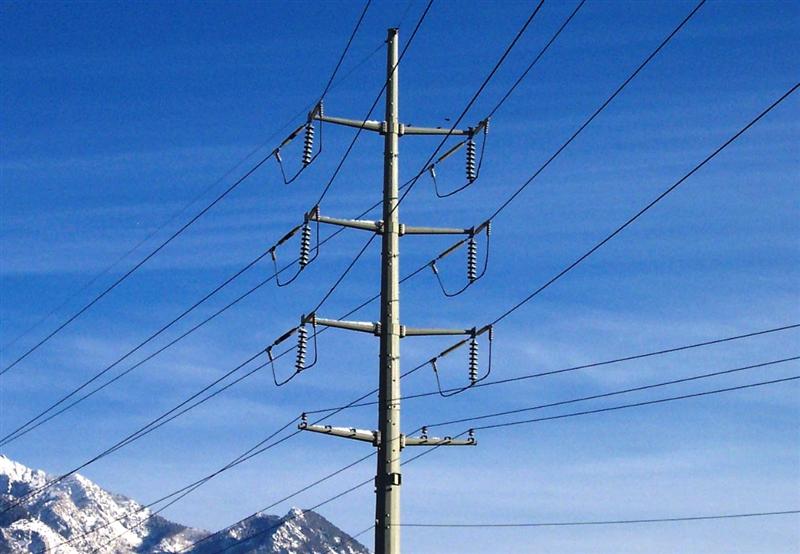
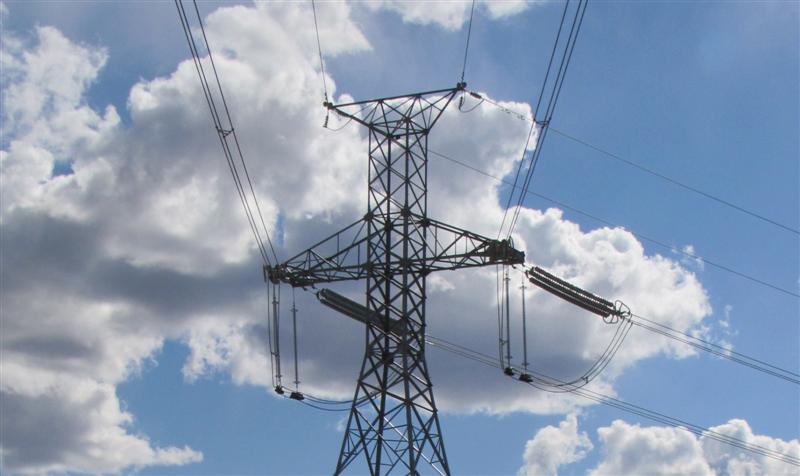
Power engineering covers three complementary areas of electrical engineering:
- power transmission and distribution systems (in short, power systems)
- energy conversion (motors, generators, and electric drives)
- power electronics
The job market is booming for graduates in electric power engineering.
The workforce in the electric
power sector is aging and the industry faces massive retirements, yet
many power engineering programs in the U.S. have been phased out. In
addition, new opportunities are exploding thanks to developments
in
power electronics. Exciting new applications include
electric cars,
(more) electric aircraft and ships, renewable
energy (wind power), and data centers.
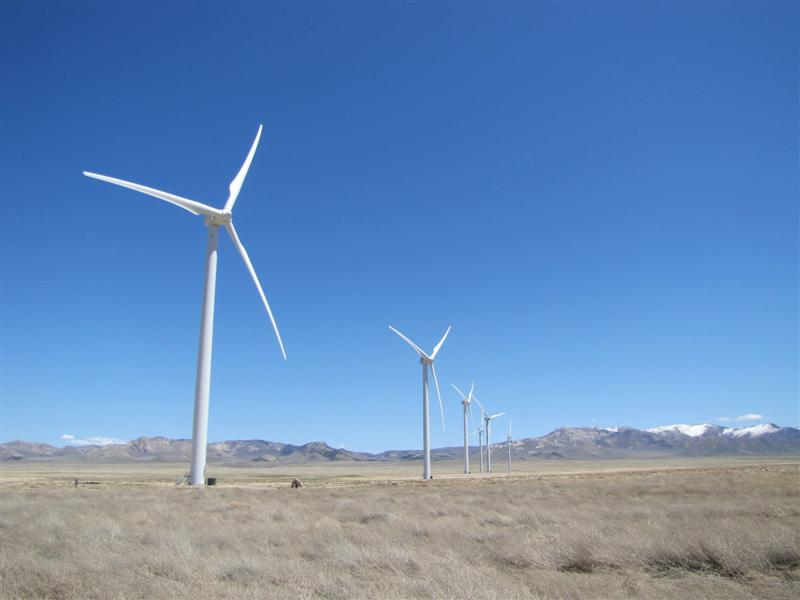
Wind turbines near Milford, Utah
|
Power engineering courses at the University of Utah
Students interested in power engineering should plan on taking the following classes.
|
ECE 3600*
|
|
Introduction to Electric Power Engineering
|
Fall , Junior year |
|
ECE 3510**
|
|
Introduction to Feedback Systems
|
Spring, Junior year |
|
ECE 5620
|
|
Power
Systems Analysis
|
Spring, Junior year |
|
ECE 5610
|
|
Power
Electronics Fundamentals
|
Fall, Senior year |
|
ECE 5670/6670
|
|
Control of Electric Motors
|
Fall, Senior year |
*
Since Fall 2011, ECE 3600 can be taken as one of three courses needed
to satisfy the breadth elective for the BS in Electrical Engineering.
**
ECE 3510 is not a power engineering course, but is a prerequisite for
ECE 5670/6670 and is closely connected to power
engineering.
The following courses have also been taught as part of the power engineering program:
ECE 6962 Utility Applications of Power Electronics, Spring 2011.
ECE 5960 Electrical Forensic Engineering and Failure
Analysis, Fall 2011.
These courses, and others to be determined, will
be offered in alternate years. Please check the schedules for further
information.
Control systems courses:
the power engineering program is closely connected to control
systems. Information about control courses is available at: www.ece.utah.edu/~bodson/advising/index.html.
Relevant courses in the mechanical engineering department:
ME EN 2080 Dynamics
ME EN 2500 Introduction to Sustainable Energy Systems Design I: Wind and Water Power
ME EN 2510 Introduction to Sustainable Energy Systems Design II: Thermal and Solar Power
ME EN 3600 Thermodynamics II
ME EN 3650 Heat Transfer
ME EN 5600 Intermediate Thermodynamics
ME 5800/6800 Sustainable Energy
Engineering
ME 6960 Fundamentals of Systems
Engineering
Courses from the nuclear engineering program are also highly relevant (http://www.nuclear.utah.edu).
MS/MBA Program
For
information on the new MS/MBA program, which may be of particular
interest to people considering the power engineering program,
please check: http://www.business.utah.edu/joint-mba/mba-ms-engineering.
AC/DC, what does it mean?
|
Scholarships
Thanks to an endowment created by the Intermountain Power Agency,
two scholarships have been given each year since 2008 to students
interested in power engineering careers. Applicants must be:
- at least at the sophomore level
- a native born Utah resident and/or have graduated from a Utah high school
- interested in a career within the power systems industry
For more information, please check http://www.ece.utah.edu/prospective/scholarships.
The IEEE's Power and Energy Society also created the PES Scholarship Plus Initiative
with the goal of increasing the number of well-qualified, entry-level
engineers to the power and energy industry. For more information,
please check http://www.ieee-pes.org/education/pes-scholarship-plus-initiative.
Contacts
Professor Marc Bodson Email bodson@ece.utah.edu Prof. Bodson's homepage
Professor Faisal Khan Email faisal.khan@utah.edu Prof. Khan's homepage
Professor Arn Stolp Email arnstolp@ece.utah.edu
Professor John Palmer Email japalmer@ieee.org Prof. Palmer's homepage
Sponsors
The Power Engineering Program would not have been possible without the
support of Utah's industry. Major donations were provided by the
Intermountain Power Agency, Rocky Mountain Power, and the Utah Rural
Electric Association, with additional funding received
from Questar, Utah Associated Municipal Power Systems, Utah
Municipal Power Agency, Reliable Controls, Williams Pipeline and Pacificorp Energy.
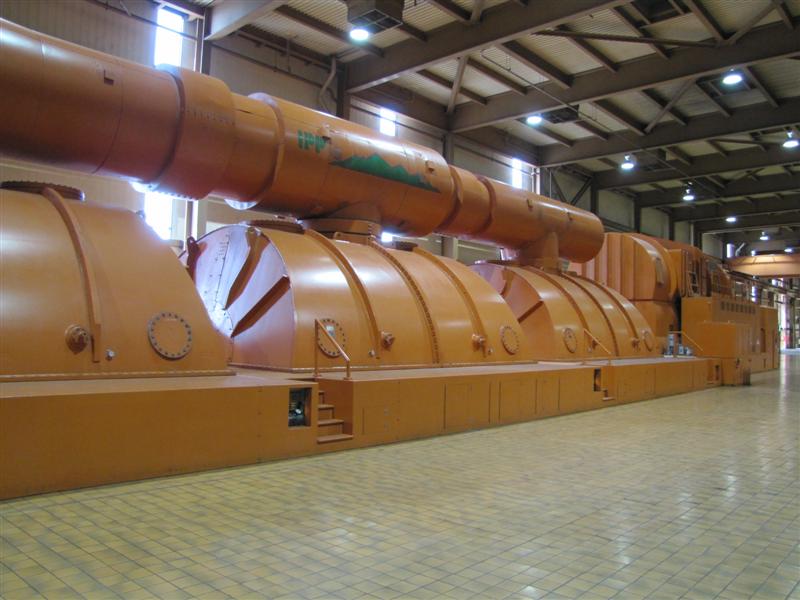
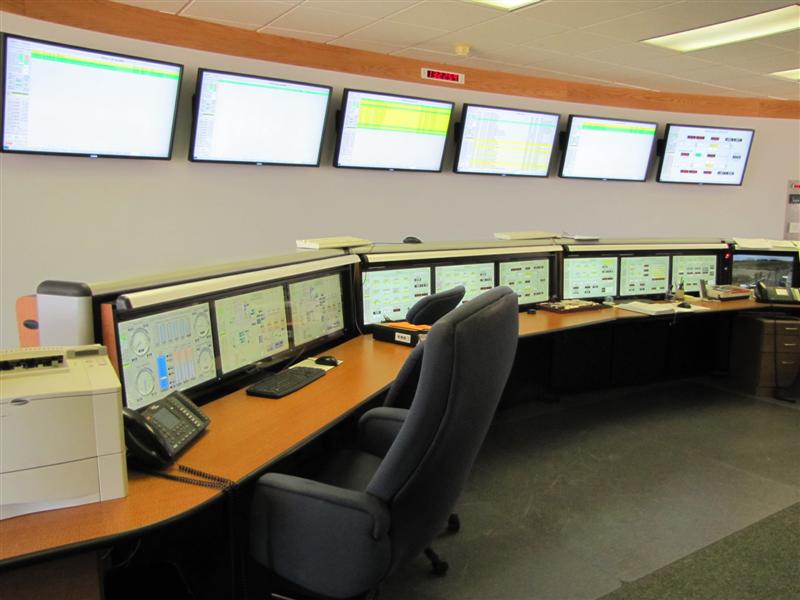
Generators and control room at the Intermountain Power Project, Delta, Utah
|
Useful web sites
- http://www.ieee-pes.org IEEE Power and Energy Society.
- http://www.ieee-pels.org IEEE Power Electronics Society.
- http://ewh.ieee.org/mu/utah/ IEEE Utah Section.
- http://www.doeconsortium.ece.umn.edu DOE-Sponsored
Nationwide Consortium of Universities to Revitalize Electric Power
Engineering Education by State-of-the-Art Laboratories.
- http://cusp.umn.edu Consortium of universities for sustainable power.
- http://geology.utah.gov/emp/energydata/electricitydata.htm Data on electric power generation in Utah.
This web site is maintained by Professor
Marc Bodson,
of the
Department of Electrical and Computer Engineering
at the University of Utah.
Please see the University of
Utah Web disclaimer.
For questions or comments, please send an e-mail to
bodson@ece.utah.edu.
Last updated: November 21, 2011