Fault Location on Aging Aircraft Wiring
|
|
|
|
|
As
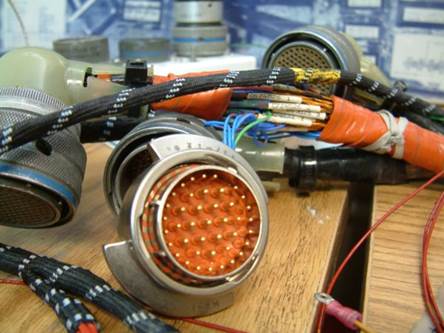
wire ages, it becomes brittle and may crack and break. Locating these problems
can take hours, days, or more, while expensive or mission-critical aircraft sit
idle. Some faults are not reproducible on the ground and show up only in
flight, often effectively grounding aircraft while maintainers struggle to
replicate or find the problem. Arc Fault Circuit (
The
Center of Excellence for Smart Sensors is developing sensors to locate these
and other faults in aging aircraft wiring.
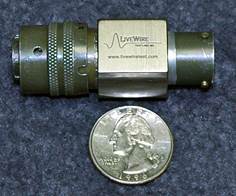
These sensors can be imbedded in handheld maintenance tools, on-board Smart Connector or Smart Wiring sensor systems, or directly into the wiring itself.
Handheld systems will give maintainers eyes
that can see through walls to locate the fault, remove a single panel, and
repair the damage in a fraction of the time commonly required today. On-board
systems will allow the pilot to test all of the wires in the plane with the
push of a button prior to take-off. Next generation systems will be constantly
monitoring the wiring and critical systems to which it is attached, will
dynamically trade out the damaged section, report the damage, plan and orchestrate
the repair, and dynamically prepare fleet maintenance plans based on data
obtained from this continual monitoring. First generation systems detect and
locate open and short circuits to within a few centimeters. Second generation
systems detect and locate arc fault damage while the aircraft is live. Third
generation systems will locate intermittent faults while the aircraft is in
flight.
Testing Live Wires, College of
Engineering Newsletter, Feb 2004
Air Force
Research Lab (via UTCD, ATT, IAStateU)
NAVAIR
National
Science Foundation
NASA
Utah
Centers of Excellence Program
Last
revised: August 2007